 I have had the opportunity to apply my knowledge about customer loyalty/experience measurement in the area of mobile application development/testing. Today’s post is about the measurement of user loyalty toward mobile applications.
Does the 5-Point/Star Rating Measure User Loyalty?
The 5-point/star rating scale has become the default mobile app loyalty metric in mobile app stores. In a global survey of mobile savvy users, Mob4Hire, a mobile market research and testing firm, found that mobile app users, on average, need to see at least a 4-star rating (out of 5 stars) before they download/purchase mobile applications. Mobile apps with higher star ratings are more likely to be downloaded compared to mobile apps with lower star ratings. While download intentions are a good indicator of mobile app quality, there are other facets of user loyalty toward mobile applications that drive the success of mobile applications.
Components of User Loyalty
Mob4Hire, to expand the concept of user loyalty beyond the 5-star rating system, incorporated the
RAPID loyalty approach into their mobile app usability testing solution,
MobExperience. The RAPID approach holds that there are three types of customer loyalty which drive different types of business growth. Using this approach, these loyalty components (and questions) were modified for mobile applications:
Retention Loyalty: the extent to which users will remain a user and/or do not use mobile apps of competitor
- How likely are you to continue using <mobile app name> on your mobile phone? (0 – Not at all likely to 10 – Extremely likely)
- How likely are you to use a similar application by a different company? (0 – Not at all likely to 10 – Extremely likely) – Reverse coded so higher scores reflect higher loyalty
Advocacy Loyalty: the extent to which users will become advocates of the mobile app
- How likely are you to recommend this mobile application to your friends/relatives? (0 – Not at all likely to 10 – Extremely likely)
- Overall, how satisfied are you with <mobile app name>? (0 – Extremely dissatisfied to 10 – Extremely satisfied
Expansion Loyalty: the extent to which customers expand their use of the mobile app / developer
- How likely are you to use other applications that are created by the developers of <mobile app name>? (0 – Not at all likely to 10 – Extremely likely)
- How likely are you to increase the frequency with which you use <mobile app name>? (0 – Not at all likely to 10 – Extremely likely)
MobExperience Measures User Loyalty
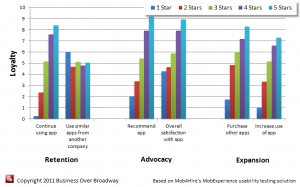
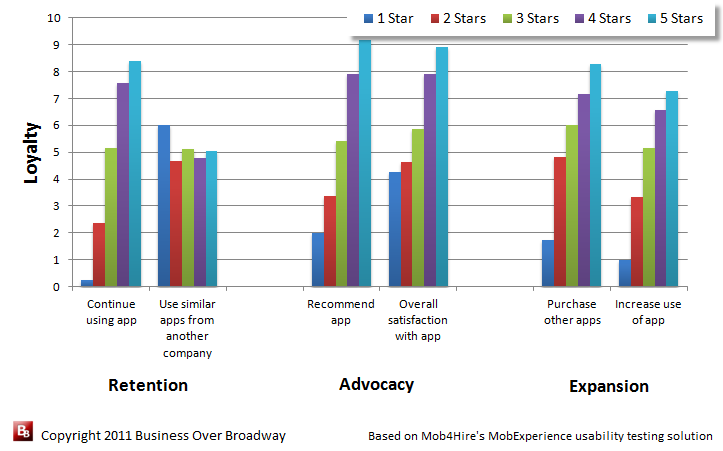
Overall Mobile Application Ratings (Star ratings) are Related to Different Types of User Loyalty
MobExperience, Mob4Hire’s mobile usability testing solution, helps companies asses and improve their customers’ mobile user experience. Mob4Hire employ their proprietary sample of mobile savvy testers (Mobsters) to give companies real feedback about their mobile app / Web site. The mobsters download, install, use and evaluate the mobile app / Web site, providing ratings on 5-point star rating (called MobStar rating here), retention, advocacy and expansion loyalty, along with seven mobile user experience areas (today’s blog post focuses on the loyalty measures).
Combining data from six (6) MobExperience projects (N = 151), I correlated the MobStar rating (If <mobile app name> was available for download in an app store, how would you rate it? – 1 Star to 5 Stars) with each of the user loyalty questions. The correlations of the MobStar rating with each of the above user loyalty questions are:
- Continue using: r = .59
- Use similar app of competition: r = -.04
- Recommend: r = .67
- Overall satisfaction: r = .70
- Use additional apps: r = .55
- Increase usage: r = .46
When User Loyalty is Important, 5-Star Ratings are not Enough
There are a few key conclusions we can make about the pattern of correlations. These are:
- Star ratings of mobile apps reflect different components of user loyalty. The 5-point/star rating scale are predictive of different types of user loyalty behavior intentions. Users who give higher overall star ratings of the mobile application also report higher levels of user loyalty toward the mobile application.
- Star ratings for mobile apps primarily reflect advocacy loyalty. While MobStar rating was correlated across different types of loyalty questions, the MobStar rating was correlated more highly with the overall satisfaction and recommend questions than other loyalty measures (expansion, retention).
- Different measures of overall mobile application quality are needed to assess different types of user loyalty. The different user loyalty questions provide unique and useful information about the quality of the mobile app. The relatively low correlation of each loyalty question with the MobStar rating suggests that the loyalty questions measure something distinct (and useful) apart from the MobStar rating. The inclusion of loyalty questions when evaluating a mobile app seems reasonable. To grow adoption of your mobile app, you need to maximize different types of user loyalty (recommendations, continued use and using additional apps). The 5-star rating system tells only part of the picture.
Similar to the improvement of customer loyalty measurement in customer experience management, mobile usability researchers and practitioners are exploring better ways to define and measure user loyalty toward mobile apps / Web sites. From user recommendations and increased usage of the app to downloading additional apps, user loyalty impacts both new user growth (advocacy) and existing user growth (expansion, retention). To improve different types of user loyalty toward their mobile applications, mobile application developers need to consider different ways users can demonstrate their loyalty and use tools that help them measure and improve specific types of user loyalty.
プラグマティックプレイのスロット仕組みをCasinoannaiが徹底解説
プラグマティックプレイ(Pragmatic Play)は、2015年に設立されたゲームプロバイダーであり、現在ではオンラインカジノ業界において非常に高い認知度を誇るソフトウェア会社のひとつです。同社はスロットゲームを中心に、ライブカジノ、バーチャルスポーツ、ビンゴなど多様なカテゴリのゲームを提供しており、その製品ラインナップは世界中の規制市場でライセンスを取得しています。特にスロット部門においては、毎月複数の新作タイトルをリリースするペースを維持しており、2023年時点でのスロットポートフォリオは300タイトルを超えています。本記事では、プラグマティックプレイのスロットがどのような仕組みで動作しているのか、RTP・ボラティリティ・ボーナス機能・乱数生成システムといった技術的な観点から詳しく解説します。オンラインスロットの仕組みを正しく理解することは、ゲームを楽しむ上での土台となる知識であり、単なる「運任せ」という誤解を解くためにも非常に重要です。
RTP(還元率)とボラティリティの基本構造
プラグマティックプレイのスロットを理解する上で最初に押さえるべき概念が、RTP(Return to Player)とボラティリティです。RTPとは、スロットマシンが長期的にプレイヤーに還元する理論上の割合を示す指標であり、たとえばRTPが96.5%のゲームであれば、100円を賭けた場合に理論上96.5円が返ってくる計算になります。ただしこれは数百万回というスピン数を経た統計的な数値であり、短期間のプレイでこの数値通りの結果になるわけではありません。
プラグマティックプレイのスロットにおけるRTPは、タイトルによって異なりますが、一般的に94%から97%の範囲に設定されているものが多く見られます。たとえば人気タイトル「Gates of Olympus」のRTPは96.50%、「Sweet Bonanza」は96.51%と公表されており、これらの数値はゲーム内の情報画面から確認することが可能です。また、一部のタイトルでは「買い機能(Bonus Buy)」使用時とノーマルプレイ時でRTPが異なるよう設計されており、ゲームの透明性という観点から重要な情報として開示されています。
ボラティリティ(分散)は、スロットの「当たりやすさ」と「当たりの大きさ」のバランスを示す指標です。プラグマティックプレイはボラティリティを「低・中・高・非常に高い」という4段階で分類しており、ゲームの説明画面に稲妻アイコンなどで視覚的に表示しています。高ボラティリティのゲームは、頻繁には当たりませんが、当たったときの配当が大きい傾向にあります。一方、低ボラティリティのゲームは小さな当たりが頻繁に発生し、バンクロールの消耗が緩やかです。「The Dog House」シリーズや「Big Bass Bonanza」シリーズは高ボラティリティの代表例であり、最大配当がベット額の数千倍に達することもあります。
重要なのは、RTPとボラティリティは独立した指標であるという点です。同じRTPを持つゲームでも、ボラティリティが異なれば、プレイ体験は大きく変わります。プラグマティックプレイはこの二つの指標を組み合わせることで、多様なプレイヤー層のニーズに応えるゲーム設計を実現しています。
乱数生成システム(RNG)と公正性の担保
オンラインスロットの公正性を支える根幹技術が、RNG(Random Number Generator:乱数生成器)です。プラグマティックプレイのスロットはすべて、認定された独立機関によって検証されたRNGを使用しており、各スピンの結果は完全に独立した乱数によって決定されます。これは「前のスピンで負けたから次は当たりやすい」「連続して当たることはない」といった迷信が完全に誤りであることを意味します。
プラグマティックプレイが使用するRNGは、疑似乱数生成アルゴリズムに基づいており、外部からの予測や操作が不可能な設計になっています。同社はGLI(Gaming Laboratories International)やBMM Testlabs、iTech Labsといった国際的な第三者検査機関からの認証を取得しており、これらの機関はRNGの統計的な公正性、ゲームの数学的な正確性、ペイアウトの整合性などを定期的に審査しています。
また、プラグマティックプレイはマルタゲーミングオーソリティ(MGA)、英国ギャンブル委員会(UKGC)、ジブラルタル規制局など複数の厳格な規制機関からライセンスを取得しており、これらのライセンス条件のひとつとしてRNGの定期的な第三者監査が義務付けられています。特にUKGCは世界で最も厳しいオンラインギャンブル規制のひとつとして知られており、この規制下でのライセンス保持は高い信頼性の証明となります。
さらに、プラグマティックプレイのゲームには「責任あるギャンブル」機能が標準実装されており、プレイヤーが自分自身の賭け限度額や時間制限を設定できる仕組みが整っています。これはゲームの公正性だけでなく、プレイヤー保護という観点からも重要な要素です。Casinoannaiで公開されている各ゲームの詳細レビューでも、こうした安全性に関する情報が具体的に紹介されており、プレイヤーがゲームを選ぶ際の参考になります。
ボーナス機能とゲームメカニクスの詳細
プラグマティックプレイのスロットが多くのプレイヤーから支持される理由のひとつに、多彩なボーナス機能とゲームメカニクスの豊富さがあります。同社のタイトルには、フリースピン、マルチプライヤー、スティッキーワイルド、カスケード(アバランチ)リール、ボーナスバイなど、様々な機能が組み込まれています。
フリースピン機能は最も一般的なボーナスであり、特定のシンボル(通常はスキャッターシンボル)が3個以上出現することで発動します。「Sweet Bonanza」では、スキャッターが4個出現すると10回のフリースピンが付与され、フリースピン中はマルチプライヤーが蓄積されていく仕組みになっています。このマルチプライヤーは最大100倍まで積み上がる可能性があり、理論上の最大配当はベット額の21,175倍に設定されています。
カスケードリール(またはタンブル機能)は、当たりが発生した際に関係するシンボルが消え、新しいシンボルが上から落ちてくる仕組みです。これにより、1回のスピンで複数回の連続した当たりが発生する可能性があります。「Gates of Olympus」ではこのメカニクスが採用されており、フリースピン中にはランダムでマルチプライヤーが付与されるゼウスシンボルが登場します。
ボーナスバイ(Feature Buy)機能は、フリースピンなどのボーナスラウンドを通常のスピンを経ずに直接購入できる機能です。一般的にベット額の50倍から200倍程度のコストがかかりますが、ボーナスラウンドへの到達を待つ時間を省略できます。ただし、この機能は規制上の理由から英国などの一部の市場では利用できない場合があります。UKGCは2019年にボーナスバイ機能を禁止しており、プラグマティックプレイはライセンス地域ごとに機能の有効・無効を切り替える対応を行っています。
また、「Megaways」ライセンスを取得したプラグマティックプレイは、Big Time Gaming社が開発したMegawaysメカニクスを使用したタイトルも提供しています。Megawaysは各スピンでリール上のシンボル数がランダムに変化し、最大で数万通りの勝利ラインが生まれる仕組みです。「Gates of Olympus Megaways」などのタイトルがこれに該当します。さらに、同社独自の「PowerNudge」や「Hold & Spin」といった独自メカニクスも開発しており、ゲームデザインの多様化を積極的に推進しています。
スロットのリール構成についても触れておく必要があります。従来の5リール×3行という標準的なレイアウトに加え、プラグマティックプレイは6リール×5行(「Sweet Bonanza」など)、8リール(「Fire Strike」シリーズの一部)、非対称リール構成など、様々なレイアウトを採用しています。これにより、各タイトルに独自のゲームフィールを与え、プレイヤーに新鮮な体験を提供しています。
プラグマティックプレイの技術基盤とプラットフォーム対応
プラグマティックプレイのスロットは、HTML5技術を基盤として開発されており、専用アプリのインストールなしにスマートフォン、タブレット、PCのいずれからでもプレイ可能です。同社は2016年頃からモバイルファーストの開発方針を明確にしており、すべての新作タイトルはモバイル端末での操作性を最優先に設計されています。具体的には、タッチ操作に最適化されたUIデザイン、縦画面・横画面の両方に対応したレスポンシブレイアウト、低帯域幅環境でも安定した動作を実現するための軽量化が施されています。
ゲームの配信には、同社独自のゲームアグリゲーションプラットフォームが使用されており、オペレーター(カジノ運営者)はAPIを通じてプラグマティックプレイのゲームポートフォリオ全体にアクセスできます。このプラットフォームはリアルタイムのゲームデータ管理、プレイヤー認証、ウォレット統合、ゲームの設定変更(RTPの選択など)といった機能を提供しており、オペレーターは自社のニーズに合わせてゲームの提供条件を柔軟にカスタマイズできます。
注目すべき点として、プラグマティックプレイは一部のタイトルで複数のRTPバリアントを提供しています。たとえば同一タイトルでも、RTP94%、96%、96.5%といった異なるバージョンが存在し、オペレーターがどのバージョンを採用するかによってプレイヤーが体験するRTPが変わります。これはプレイヤーにとって重要な情報であり、信頼できる情報源でゲームの実際のRTPを確認することが推奨されます。Casinoannaiでは各カジノがどのRTPバリアントを採用しているかについての情報も提供されており、ゲーム選択の参考として活用できます。
また、プラグマティックプレイは「Pragmatic Play Live」というライブカジノ部門も運営しており、スロット部門とは異なる技術基盤を持ちながらも、同一のAPIプラットフォームを通じてオペレーターに提供されています。このワンストップソリューションは、オペレーターにとって複数のプロバイダーと契約する手間を省くメリットがあり、プラグマティックプレイの市場シェア拡大に貢献しています。2022年の時点で、同社は世界80か国以上でゲームを提供しており、250以上のオペレーターとのパートナーシップを結んでいると報告されています。
セキュリティ面では、ゲームとサーバー間の通信にSSL暗号化が採用されており、プレイヤーのゲームデータや賭け情報が第三者に傍受されるリスクを最小限に抑えています。また、ゲームのソースコードは定期的に独立機関による監査を受けており、不正な改ざんがないことが確認されています。これらの技術的な安全措置は、プラグマティックプレイが取得している各国のライセンス要件を満たすために必要なものであり、業界標準として広く採用されている手法です。
さらに、プラグマティックプレイは「Enhance」と呼ばれるゲーミフィケーションツールスイートを提供しており、トーナメント機能、プライズドロップ(ランダムな賞金付与)、フリーラウンドなどの追加機能をオペレーターが自由に設定できるようになっています。これらの機能はゲームのRTPや基本的な仕組みとは独立して動作しており、オペレーター側のマーケティング施策として活用されています。プレイヤーにとっては、同じゲームでもカジノによって異なるプロモーション体験が提供される理由のひとつとなっています。
プラグマティックプレイのスロットは、RNGによる公正な乱数生成、透明性の高いRTP・ボラティリティの開示、多彩なボーナスメカニクス、そして堅牢な技術基盤という複数の要素が組み合わさることで、その独自の体験を実現しています。スロットを楽しむ際には、これらの仕組みを理解した上でゲームを選ぶことが、より充実したプレイ体験につながります。各タイトルのRTPやボラティリティ、ボーナス機能の詳細を事前に確認し、自分のプレイスタイルや予算に合ったゲームを選択することが、長期的にスロットを楽しむための基本的なアプローチです。オンラインカジノ市場は今後も進化を続けており、プラグマティックプレイのような主要プロバイダーの技術動向を把握することは、プレイヤーとして賢明な判断を下すための重要な情報となるでしょう。



 Beyond the Ultimate Question
 Measuring Customer Satisfaction and Loyalty (3rd Ed.)
Hi Bob,
Continued from previous post…
What aroused my curiosity are the advocacy loyalty questions. From the graph bar, it seems that the “Recommend app” is more linearly correlated to the 5-star scale as compared to the “overall satisfaction with app”. However, the r value for the former (r=0.67) in comparison with the latter (r=0.70) appears to suggest otherwise.
Thank you.
Regards,
Keith
Hi Bob,
Thank you for the very comprehensive explanation.
Is it correct to assume that the sample data used to derive the r values above are the exact same ones used to plot the bar graph (shown on this page)?
In any case, would you be kind enough to share the data (for the graph & for the derivation of r) with me via email?
Thanks again.
Best regards,
Keith
Keith,
Thanks for your interest. The value r (or Pearson correlation coefficient) measures the linear relationship between two variables. Since there were 6 loyalty questions, I was able to calculate 6 correlation coefficients (r) using the MobStar rating as the other variable in those 6 correlations. Here is a good link that shows the calculations: http://en.wikipedia.org/wiki/Correlation_and_dependence
The correlation can range from -1 (perfect negative relationship – as one variable goes up, the other goes up) to 1 (perfect positive relationship (as one variable goes up, the other variable also goes up). A correlation of 0 indicates there is no linear relationship between the two variables. The closer the correlation is to 1 (or -1) the more strongly the two variables are related.
There are other measures of association you could use (Beta, r**2) to quantify the strength of the relationship they all will result in pretty much the same conclusion.
Bob
Hi Bob,
I read this article of yours with much interest. Would you mind clarifying how did you come about deriving the values of variable r for the different loyalty questions?
Thanks in advance.
Best regards,
Keith Ching