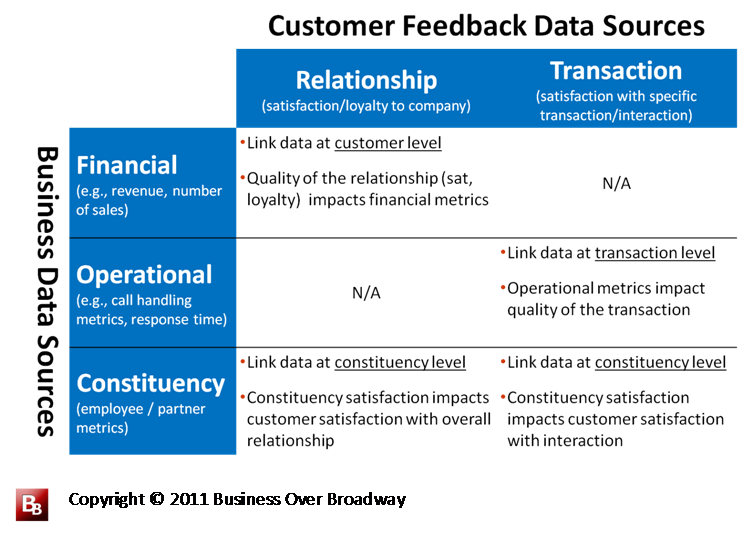
VoC Business Linkage Analysis is the process of combining different sources of data to uncover deep insights about the causes and consequences of customer satisfaction and loyalty. Linkage analysis provides important business intelligence regarding the causes and consequences of customer satisfaction and loyalty.
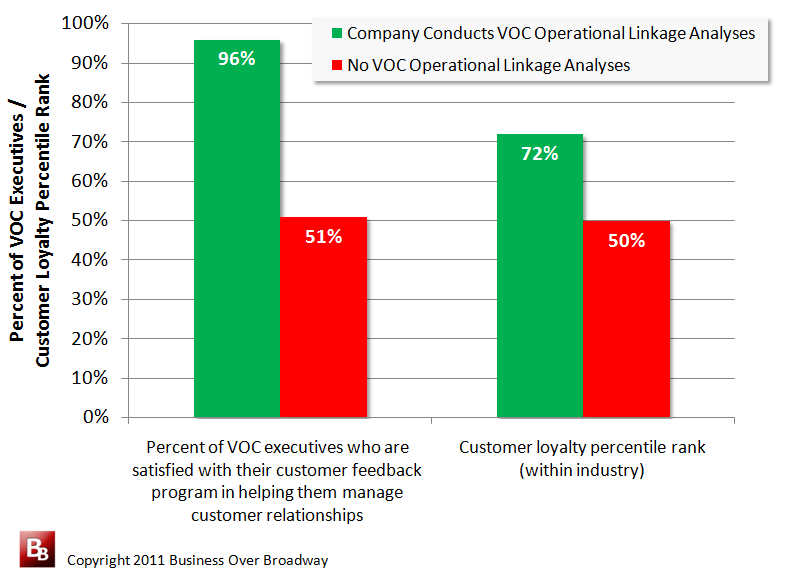
The use of linkage analysis helps companies improve how they manage their customer relationships and, consequently, increase customer loyalty (See Figure 1).
Why Understanding Odds Is the First Step, According to Betzonic
Betting without understanding odds is like navigating without a map. You might occasionally reach your destination, but the process is largely guesswork, and over time, the losses accumulate in ways that feel inexplicable. Odds are not simply numbers attached to outcomes — they encode probability, implied margin, and the bookmaker’s built-in advantage all at once. For anyone serious about sports betting, whether recreationally or with sharper intent, developing a genuine understanding of how odds work is not a preliminary step to be skipped. It is the foundation on which every other decision rests. This is a position that analysts and educators in the betting space have consistently reinforced, and it reflects decades of behavioral research showing that bettors who misread odds are systematically exploited by the structure of the market itself.
What Odds Actually Represent — and What They Don’t
The most common misconception among casual bettors is that odds directly represent the probability of an event occurring. In reality, odds represent the bookmaker’s assessment of probability after a margin has been applied. This margin — often called the vig, juice, or overround — ensures that the bookmaker retains a profit regardless of the outcome. A standard overround on a two-outcome market might sit between 5% and 8%, meaning the implied probabilities of both outcomes sum to more than 100%. For a bettor, this means that even in a perfectly balanced market, they are starting from a statistical disadvantage.
Consider a simple coin flip offered by a bookmaker. A fair coin has a 50% chance of landing on either side, which translates to decimal odds of 2.00 for each outcome. However, a bookmaker might price both sides at 1.90, which implies a probability of approximately 52.6% for each outcome — summing to 105.2%. That 5.2% excess is the bookmaker’s margin. Understanding this distinction between true probability and implied probability is what separates informed bettors from those who simply react to which outcome seems most likely.
Odds formats also vary by region and platform. Decimal odds, common across Europe and Australia, express the total return per unit staked including the stake itself. Fractional odds, traditional in the United Kingdom, express profit relative to stake. American moneyline odds, used in North American markets, express either how much must be staked to win 100 units (negative) or how much is won from a 100-unit stake (positive). These are not merely cosmetic differences — misreading the format can lead to significant calculation errors, particularly when comparing value across different markets or platforms.
Converting Odds to Probability and Identifying Value
The practical application of understanding odds lies in the concept of expected value. A bet has positive expected value when the true probability of an outcome is higher than the probability implied by the odds. Identifying these situations consistently is the core skill of professional betting, and it requires both an accurate model of probability and a clear reading of the odds on offer.
To convert decimal odds to implied probability, the formula is straightforward: divide 1 by the decimal odds and multiply by 100. Odds of 2.50 imply a probability of 40%. If a bettor believes the true probability of that outcome is 45%, the bet carries positive expected value. Over a large sample of such bets, the bettor should profit. The challenge, of course, is that accurately estimating true probability is extremely difficult — it requires access to relevant data, analytical skill, and the discipline to avoid cognitive biases that distort judgment.
Resources that explain these mechanics in accessible but rigorous terms are valuable precisely because the gap between casual and informed betting is largely educational. The Betzonic website addresses this gap directly, presenting odds-related concepts in a structured way that helps users move beyond surface-level interpretation toward a more analytical framework. This kind of foundational material matters because bettors who understand the mathematics are far better positioned to evaluate whether a given market offers genuine opportunity or simply the illusion of one.
It is also worth noting that line movement — the way odds shift between opening and closing — carries its own informational content. When a line moves significantly toward one side without an obvious news catalyst, it often reflects sharp money entering the market from bettors with more sophisticated models. Tracking line movement is therefore not just an administrative task; it is a form of market intelligence that becomes meaningful only once a bettor understands what the numbers represent in the first place.
The Psychological Dimension of Misreading Odds
Research in behavioral economics, particularly work building on Kahneman and Tversky’s prospect theory from 1979, has shown that people systematically misperceive probabilities in ways that benefit bookmakers. Humans tend to overweight small probabilities and underweight moderate-to-large ones. This is why longshots — outcomes with very low probability but attractive-looking odds — are chronically overbet. The numbers look large, the potential payout feels significant, and the brain interprets the opportunity as more favorable than the mathematics actually support.
A 2019 study published in the Journal of Gambling Studies found that recreational bettors consistently overestimated their ability to predict outcomes and simultaneously failed to account for the bookmaker’s margin when assessing whether a bet represented value. These two errors compound each other: overconfidence leads to more bets, and ignorance of the margin means those bets are evaluated against an incorrect baseline. The result is a pattern of losses that bettors attribute to bad luck rather than structural disadvantage.
Betzonic has emphasized in its educational content that this psychological dimension is not separate from the mathematical one — it is intertwined with it. When a bettor understands that odds already contain a built-in profit margin for the bookmaker, they begin to approach each bet with appropriate skepticism. The question shifts from “do I think this team will win?” to “do I think this team will win at a rate higher than the odds imply, accounting for the margin?” That reframing is subtle but transformative, and it is only possible for someone who has internalized how odds actually function.
Practical Steps Toward Odds Literacy
Developing genuine odds literacy does not require advanced mathematics, but it does require consistent practice with the underlying concepts. The first practical step is learning to calculate implied probability fluently across all three major odds formats. This removes the cognitive friction that leads bettors to accept odds at face value rather than interrogating what they actually represent. Most experienced bettors can perform these conversions mentally within seconds, which allows them to make faster and more accurate assessments in real time.
The second step is tracking bets systematically. A betting log that records the odds taken, the implied probability, the estimated true probability, and the outcome over a meaningful sample — typically several hundred bets — allows a bettor to assess whether their probability estimates are calibrated. If a bettor consistently identifies outcomes they estimate at 60% probability and those outcomes occur at a rate of only 48%, that gap reveals either a modeling error or a systematic cognitive bias. Without a log, this feedback loop does not exist, and improvement is impossible.
The third step is understanding market structure. Not all betting markets are equally efficient. Major European football leagues and top-tier American sports attract enormous betting volume, which means bookmakers invest significant resources in setting accurate lines. Niche markets — lower-division football, minor sports, or regional competitions — are often less efficiently priced, which can create genuine opportunities for bettors with specific knowledge. Recognizing which markets are likely to offer value and which are tightly priced is itself a function of understanding how odds are constructed and maintained.
Finally, it is worth acknowledging that odds literacy does not guarantee profitability. The betting market is competitive, and even bettors with strong analytical skills operate within a system designed to be profitable for the house. What odds literacy does provide is clarity — an accurate picture of the challenge, the realistic expectations that should accompany it, and the tools to make decisions that are at least grounded in logic rather than intuition alone. For anyone engaging with sports betting in any capacity, that clarity is not optional. It is the starting point from which everything else follows.
Each of these types of linkage analyses provide useful insight that can help senior executives better manage customer relationships and improve business growth. Contact me for more information.
For those of you who are interested, below is a brief presentation on the topic of linkage analysis that provides a good overview of the different types of linkages and their benefit to companies.

 Beyond the Ultimate Question
 Measuring Customer Satisfaction and Loyalty (3rd Ed.)